Since Ian and Milton, half the removals we get called for in North Port and Warm Mineral Springs are trees that survived the storm but never recovered — root plates lifted, tops broken out, pines browning from the crown down. They come out easier now than they will after the next one.
Every removal starts with two questions: where is it going to land, and does the city need to sign off first. We answer both before a saw comes out of the truck. If your tree looks like a Certificate of Zoning Compliance case, we tell you that instead of quietly cutting and leaving you holding the violation.
Booking is by form. A dispatcher texts you back — usually within a few hours — with a price and the next open window.
What we take down around here
Slash and sand pine
The storm casualty of southwest Florida. Shallow-rooted in sand, they lean first and fail later. Sectional takedown over a roof, not a straight drop.
Live oak
Heavy, wide and often protected once it hits 24 inches DBH. Frequently a permit case — we check before we quote a removal.
Sabal and queen palm
Fast work, cheap relative to hardwoods. Watch for nesting and for boots hiding rot at the base.
Brazilian pepper, melaleuca, Australian pine
Invasive exotics. These are the removals least likely to need a permit and the ones we do most often on vacant lots.
North Port tree permits, in plain English
Removals on a developed lot are where the North Port ordinance bites hardest. Read this before you schedule.
- North Port updated its tree rules in October 2024 under the ULDC. Many removals on developed lots now run through a Certificate of Zoning Compliance in the city's Accela portal, usually with a tree location survey attached.
- Heritage trees — protected native species measuring 24 inches or more DBH — get extra scrutiny and may require mitigation or replacement plantings.
- A permit often isn't needed for invasive species like Brazilian pepper, melaleuca and Australian pine, for trees verified dead on a vacant lot, or where a tree is an imminent danger. Document it with photos before anything comes down.
- We pull and follow the paperwork on jobs we do, and we'll tell you up front if your tree looks like a permit case rather than a same-week job.
This is a contractor's working summary, not legal advice. Confirm your specific lot with the City of North Port. northportfl.gov or treeremoval@northportfl.gov.
Tree removal questions
- Do I need a permit to remove a tree in North Port?
- It depends on the species, the size and whether the lot is developed. Since the October 2024 ULDC update, many removals go through a Certificate of Zoning Compliance in Accela with a tree location survey. Invasives, verified dead trees on vacant lots and imminent-danger situations are commonly treated differently.
- A pine is leaning over my roof after the last storm. How fast can you get here?
- Leaners over a structure get moved to the front of the schedule. Send a photo with your form and we'll tell you the same day whether it's an emergency drop or something that can wait for a normal slot.
- Do you take the stump too?
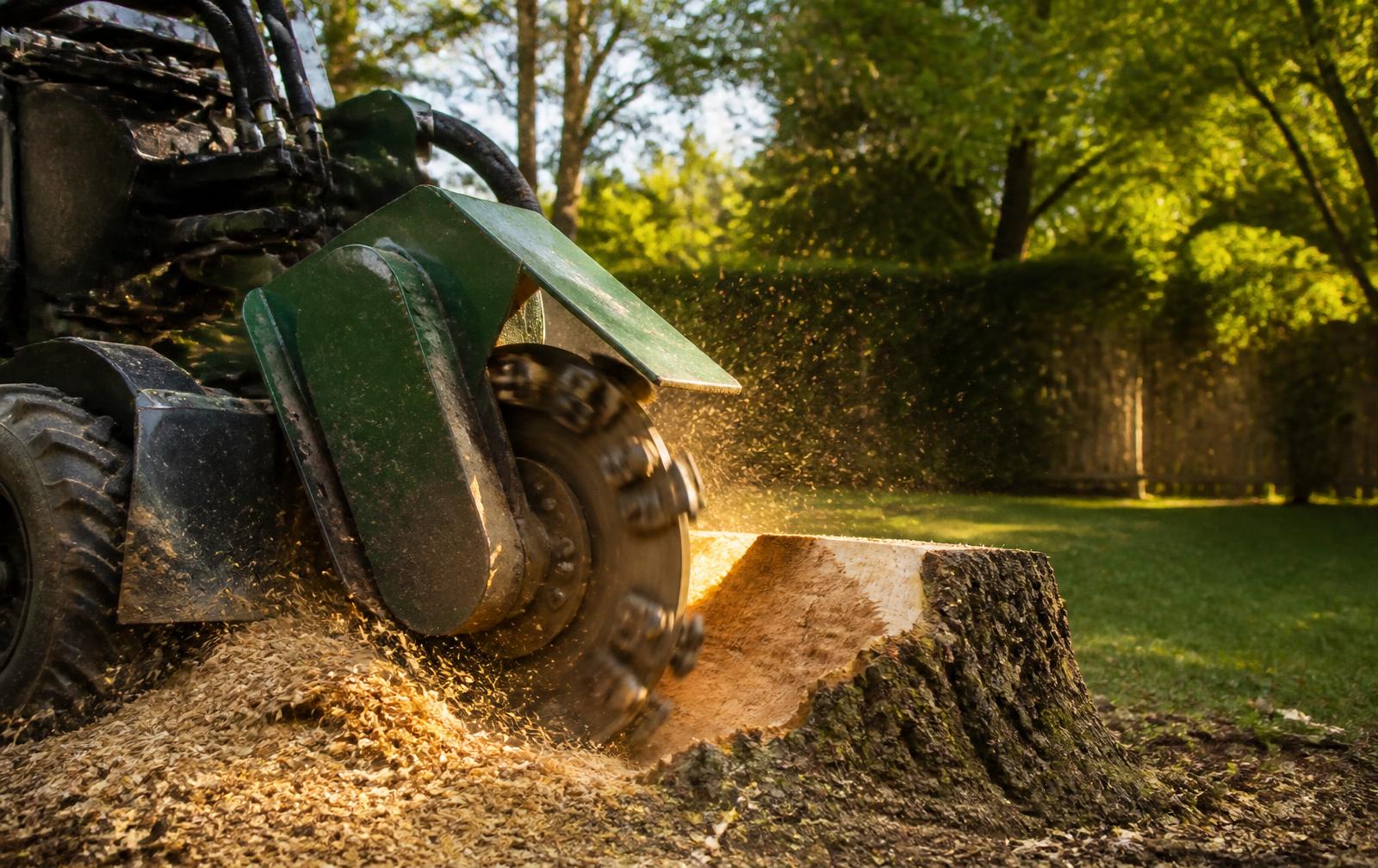
- Only if you want it. Grinding is a separate posted-price add-on — $99 up to 12 inches, $120 to $150 for 13 to 20 inches. Plenty of people leave the stump and call us back later.
- Are palms priced the same as hardwoods?
- No. Sabal and queen palms are usually quicker and cheaper than an equivalent-height pine or live oak, because there's no spreading canopy to rig down piece by piece.
- What about a tree on the property line?
- We need both owners on board before it comes down. It's the single most common reason a scheduled removal gets paused, so sort it early.
Tree already down and just the stump left? See posted stump grinding prices.